

The war between Iran and the U.S.–Israel “duo” is affecting the entire Middle East. What began as a confrontation between two opposing sides has evolved into a complex regional struggle, with numerous actors either directly engaged or carefully observing, while retaining strategic leverage that could help calm the situation or further escalate it.
On the military level, the United States and Israel could theoretically rely on the Arab countries of the Gulf. However, so far they have avoided direct involvement in a large-scale war, primarily due to the economic and security risks that such development would entail.
Iran, for its part, has spent decades preparing for a conflict spanning the entire Middle East by building a broad network of proxies capable of operating on multiple theatres.
In Lebanon, Hezbollah remains engaged in a destructive war with Israel, maintaining constant pressure on a strategic front.
In Iraq, Shiite militias aligned with Iran are targeting U.S. as well as European assets across the country. Moreover, they could expand their activities along the Iraq-Syria border, should the new government in Damascus decide to intervene against Hezbollah in Lebanon.
Another major pressure point lies with the Houthis in Yemen, who could target Arab Gulf countries and disrupt maritime traffic in the Bab el-Mandeb Strait, one of the world’s most critical trade routes. Such action would further strain the already fragile state of global commerce and energy markets caused by the ongoing tensions surrounding the Strait of Hormuz.
At present, each side is attempting to avoid giving the other a decisive advantage while keeping its options open. This delicate balance creates a situation in which even limited escalation could quickly trigger broader regional repercussions.
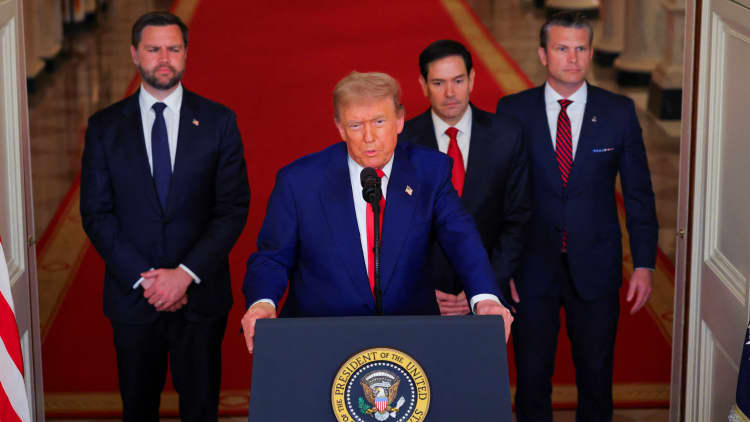
These dynamics pose not only military but also political and symbolic challenges for the United States, placing the Trump administration in a particularly difficult position.
Washington must avoid a scenario that could spiral out of control, undermining both its long-term influence in the Middle East and its international standing in the context of geopolitical competition with China.
The central question is: how can the United States emerge from the confrontation with Iran in a position of strength while appearing victorious? The outcome may shape not only the regional balance of power, but also the future of American global influence for decades to come.